
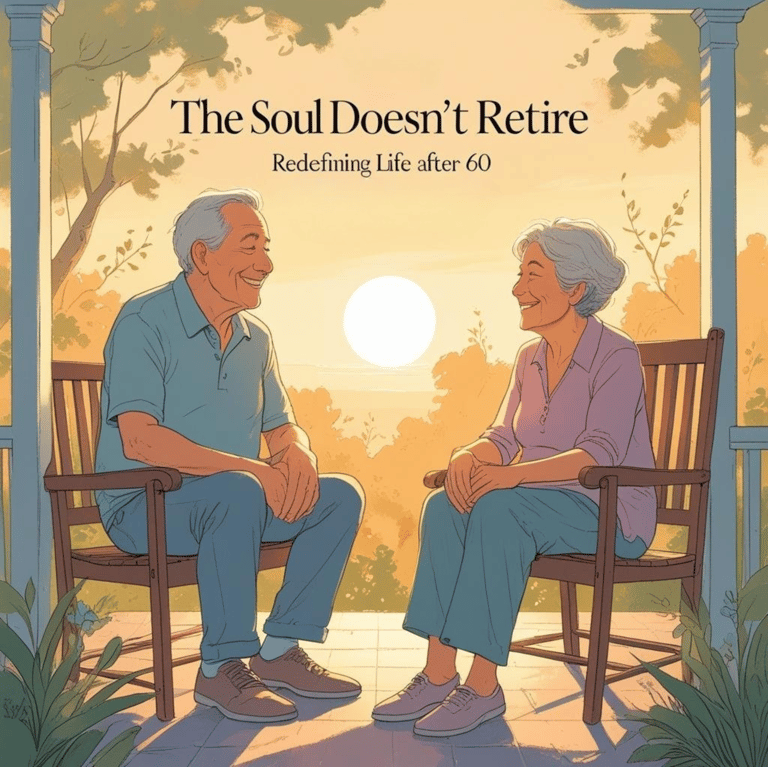
Morning Muse 45 : The Soul Doesn’t Retire: Redefining Life After 60
"Our Souls at Night," starring Jane Fonda and Robert Redford, tenderly reminds us that companionship knows no age limit. In a society that often sidelines its elders, this story challenges the idea that love, joy, and change end at sixty. Through warmth, courage, and quiet defiance, it asks a powerful question: How do you want to live the rest of your life?
8/16/20252 min read
"Would you be interested in coming to my house sometime to sleep with me?"
A 70-year-old woman knocks on the door of her equally elderly neighbor one evening and gently poses this unexpected question. The woman is Jane Fonda, the man is Robert Redford, and the moment unfolds in the Netflix film Our Souls at Night, directed by India’s own Ritesh Batra.
When Jane Fonda utters that line, she does so with such grace and dignity that it’s disarming. It isn’t about lust or scandal—it’s about loneliness, companionship, and the quiet courage to seek warmth in the later chapters of life. What follows is a tender exploration of two aging souls finding solace in each other’s presence. As they come together to share their solitude, they begin to heal—and even rediscover love.
"Who would’ve thought, at this time in our lives, that we’d still have something like this—that we’re not finished with changes and excitements… not all dried up in body and spirit."
Fonda plays a woman in control—unbothered by small-town gossip. Redford, however, is hesitant, self-conscious about societal judgment. She invites him in boldly—offering dinner, pouring drinks—while he sneaks in from the back door with a paper bag of nightclothes. But one night, she refuses to open the back door. She insists he use the front—forcing him to step into the light of his own life.
As their quiet romance grows, reality intrudes with the arrival of Fonda’s son and grandson. Yet even this doesn’t break the beauty of their bond. The ending is not dramatic, but gently luminous—full of hope and understated joy.
For someone like me, born and brought up in India, such a relationship between two septuagenarians once seemed implausible. But Batra’s sensitive direction, a nuanced screenplay, and the soft, stirring background score make it utterly real. Each time Redford tiptoes into Fonda’s home, a smile crosses your face. And in that smile lies the power of this story: the reminder that life has no expiry date on companionship.
But what about us?
In India, we often relegate our elders to the sidelines of life. Once they cross a certain age, they’re expected to be wise, silent spectators—doting grandparents, quiet retirees, morning walkers, and part-time babysitters. Joy becomes something they’ve already had, and love is assumed to be behind them.
Even in progressive families, this stereotype persists. Yet not all minds age with the body. Some remain youthful, curious, affectionate—and ache for connection. But instead of giving them space, we bind them tighter—to tradition, obligation, and silence.
What if we gave them freedom instead?
Freedom to travel, to love, to live, to form new relationships—even live-in ones if they choose. Freedom not just from work, but from judgment. If we speak of equal opportunity, it must include our elders too.
And it’s not just society—our elders must give themselves permission as well. To ask: How do I want to spend the rest of my life?
As Jane Fonda’s character says so powerfully:
"I’ve made up my mind—I’m not going to pay attention to what people think. I’ve done that all my life. I’m not going to live that way anymore."
To all those who believe life ends at 60—know that it doesn’t. There is life after 70. After 80. Even after 90.
Age is just a number. The soul doesn’t retire.
If you believe this—or even want to believe it—watch Our Souls at Night.
And if you’re still young and think this doesn’t apply to you—just wait. Age comes for everyone.