
Morning Muse 286 : Poila Boishakh
Poila Boishakh symbolizes heartfelt renewal—settling the past, opening a fresh chapter, and beginning the year with balance, gratitude, and joy. Like new account books, it reminds us to clear old dues—within and without—and step forward with sweetness, courage, and harmony.
4/15/20261 min read
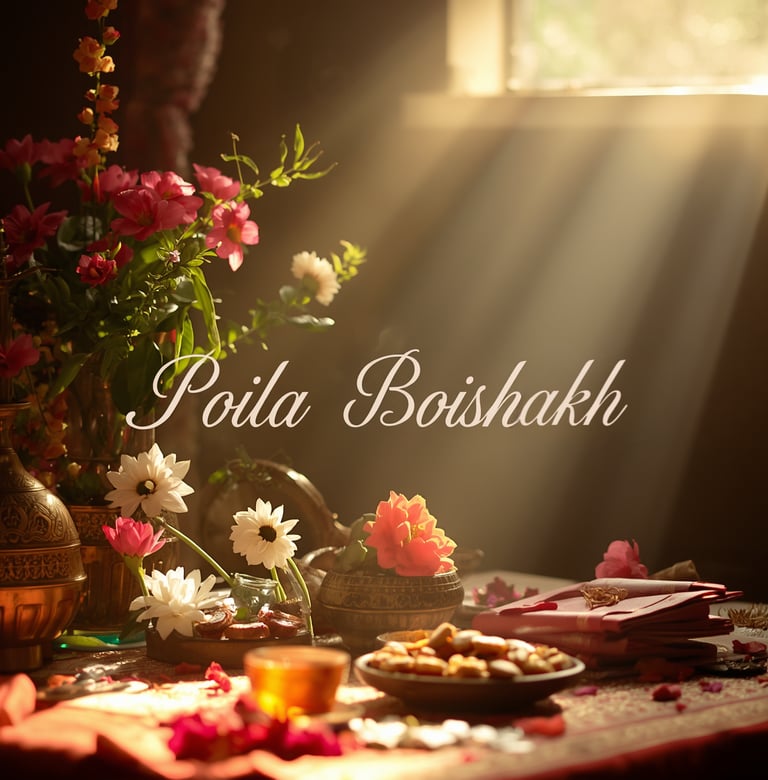
Shubho Noboborsho.
In Bengal, the New Year does not arrive with noise, but with melody—the notes of Rabindra Sangeet, the fragrance of fresh sweets, the opening of new account books (Haal Khata), and the red-white grace of tradition. Together, they whisper a simple truth: begin afresh, but begin with heart.
There is an old Bengali saying:
“Baro maash e tero parbon”—in twelve months, thirteen festivals.
Life here teaches us that celebration is not an escape from struggle; it is strength within it.
The shopkeeper writes new entries only after settling old dues—reminding us that renewal requires closure. Nature echoes the same wisdom. Before new blossoms appear, old leaves must fall. The dust of the past season must settle for freshness to arrive.
Life follows this rhythm.
Old grievances, regrets, fears, and worn-out thoughts belong to yesterday’s season. If we hold on to them, the new month, the new opportunities, and the new energy cannot truly enter.
Boishakh is not just a change of calendar; it is an invitation to renew ourselves.
It calls us to balance intellect with emotion, ambition with art, and progress with compassion.
Let us open our inner Haal Khata—forgive past grievances, renew our commitments, and write the first line of the year with courage and kindness.
Let Chaitra take away what is no longer needed. Step into Boishakh lighter, clearer, and open to the new.
Only an empty space can welcome fresh light.
May this Noboborsho bring sweetness in speech, clarity in thought, prosperity in effort, and harmony in relationships.
As the conch blows and the new sun rises,
may we begin again—lighter, wiser, and joyful.