
Morning Muse 235 : The Mustard Seed and the Universality of Grief
Grief becomes bearable when one recognizes its universality and the impermanent nature of life. Rather than denying suffering, the Buddha leads Kisā Gotamī toward experiential wisdom, transforming despair into compassion and insight. Her awakening affirms that realization arises through lived understanding, and that women, regardless of status, are fully capable of enlightenment.
2/22/20261 min read
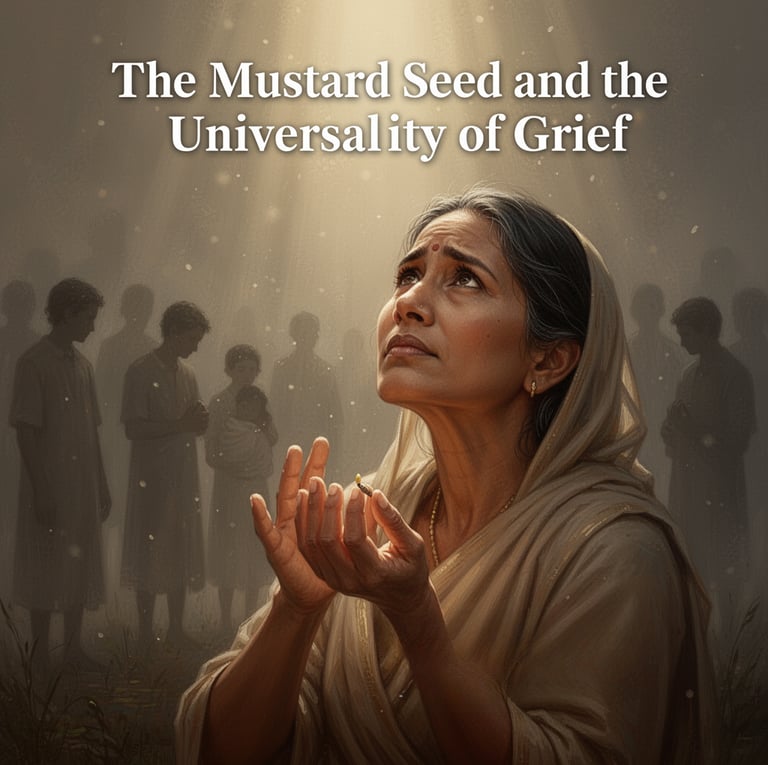
This story of Kisā Gotamī beautifully illustrates the Buddha’s profound understanding of grief, impermanence, and the dignity of women. Overwhelmed by the death of her only child, she sought a miracle to reverse death itself. Instead of dismissing her pain or offering false hope, the Buddha guided her toward insight through lived experience. He asked her to bring mustard seeds from a house untouched by death.
As she moved from home to home, village to village, she discovered a universal truth — no household had been spared loss; death touches all. This realization did not erase her sorrow, but it transformed it, replacing isolation with shared humanity and compassion. By the time she returned, having buried her child, her grief had ripened into wisdom.
The Buddha then initiated her into meditation, and she later became one of his enlightened disciples. The story powerfully affirms impermanence (anicca), the humanization of grief, and the Buddha’s radical inclusiveness — recognizing a grieving woman from a marginalized background as fully capable of awakening.