
Morning Muse 234 : The Blind Man and His Arguments
Truth cannot be grasped through arguments or second-hand belief, but only through direct experience. The Buddha shows that explanations are useless when the capacity to see is absent; what is needed is inner healing and practice, not persuasion. True wisdom arises when we seek and experience truth personally, rather than accepting even the highest teachings on blind faith.
2/22/20261 min read
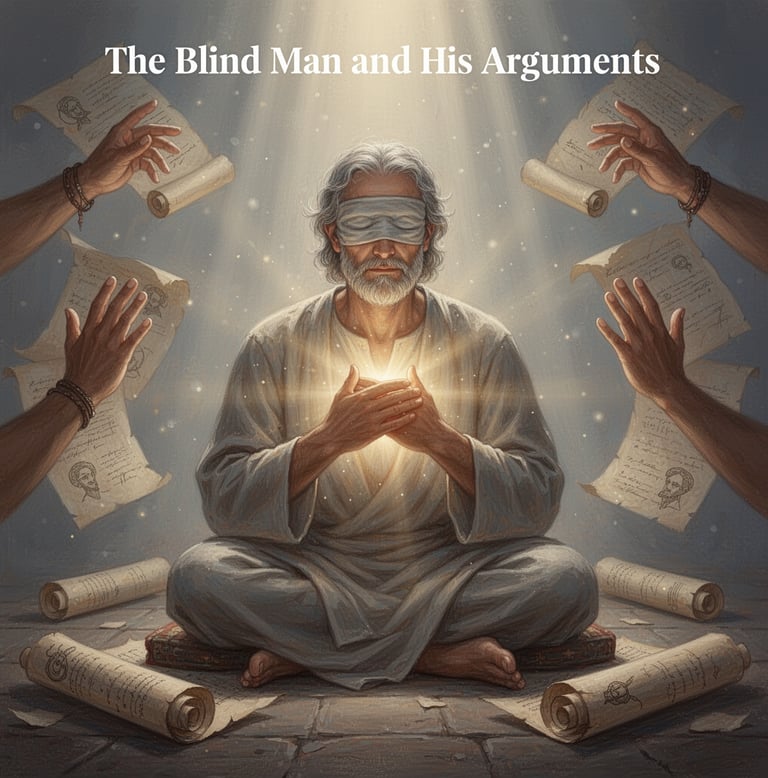
When Gautama Buddha visited a small village, people gathered around him seeking solutions to their troubles. One day, a group of villagers brought along a blind man. Though he had no sight, he constantly argued with them about light.
They tried to explain that light exists, but he refused to believe it. He demanded to touch light, to hear it, to taste it, or to smell it. When none of this was possible, he accused them of inventing the idea of light merely to prove that he was blind.
The blind man himself spoke boldly:
“If light is real, let me experience it through my other senses.”
His friends felt helpless. They knew light existed, yet his arguments were so logical that they found themselves unable to convince him. They asked the Buddha to help him understand.
The Buddha listened quietly and then said something unexpected:
“I will not try to convince him. Human problems have increased because people keep explaining things to those who cannot see. You have brought him to the wrong person.”
When they insisted, the Buddha clarified:
“He does not need preaching; he needs treatment. Take him to a physician who can cure his eyes. Once his eyes are healed, there will be no need for explanations.”
Following this advice, the friends took the man for treatment. After months of care, his sight was restored. By then, the Buddha had left the village. The man sought him out, bowed deeply, and said,
“I was wrong. Light does exist. I could not believe before because I could not see.”
The Buddha replied gently,
“You were wrong, but your refusal to blindly accept others’ words led to your cure. Had you believed without experiencing, you would never have sought treatment. Truth must be seen directly, not borrowed.”
The teaching is clear: wisdom does not arise from accepting someone else’s insight, no matter how enlightened they may be. Arguments cannot replace experience. Explanations cannot substitute vision.
True understanding begins when we stop clinging to borrowed beliefs and gather the courage to see for ourselves.