
Morning Muse 218 : Learning to Give Before Learning to Take
Every child carries both the impulse to take and the impulse to give. What matters is which we nurture. Joy in sharing and restraint in taking reflect higher values, while reluctance to give lowers the quality of life. These values are best taught not through instruction, but through quiet example.
2/6/20262 min read
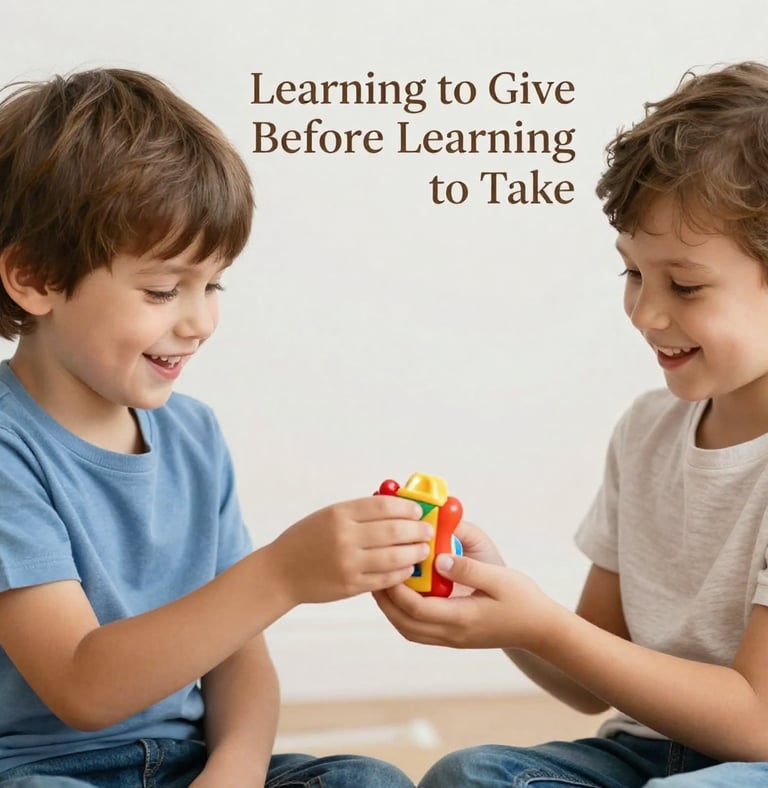
Within every human being exist two natural tendencies—the impulse to take and the impulse to give. What truly shapes the future of society is which of these tendencies we consciously nurture in our children. Values are not taught through instruction alone; they are absorbed through observation, example, and lived experience.
When a child feels hesitant to ask for or take from others, it often reflects a healthy value system rooted in self-respect and restraint. However, when a child hesitates to give or share, it signals that something is amiss. A society progresses when people are quick to extend a helping hand, and it declines when hands are eager to take but reluctant to offer support.
In a sattvic state of mind, a child naturally experiences joy in sharing belongings and resources. Giving comes effortlessly, without calculation. In contrast, a rajasic tendency drives a child to accumulate—to take from others even when there is already enough. This restlessness to possess more, despite abundance, reveals an imbalance that calls for gentle correction.
It is therefore essential to cultivate in children the happiness of giving and sharing, along with a healthy hesitation to ask or take unnecessarily. They should feel a natural discomfort in stretching their hands out to demand, and a quiet satisfaction in offering help. It is indeed strange—and unfortunate—that some people continue to ask for more even when they already have more than sufficient.
When a person develops generosity along with restraint in taking, life moves toward a higher and more refined level of existence. When there is reluctance to give and no hesitation in taking, life descends to a lower plane. Beyond this lies an even darker tendency—pouncing, grabbing, and seizing—which reflects the most degraded level of existence.
Yet the world contains all kinds of people, and all kinds of behaviour will continue to exist. It is neither necessary nor helpful to condemn or judge others. Our true responsibility lies with ourselves: to live by these values and set a quiet, living example. By doing so, we inspire change without guilt, and teach the value of sharing through the power of our own conduct.