
Morning Muse 215 : The Doctor’s Prescription
Blind devotion is like worshipping a doctor’s prescription without taking the medicine. Only the direct practice of Dhamma—sīla, samādhi, and paññā—through lived experience removes suffering.
2/3/20261 min read
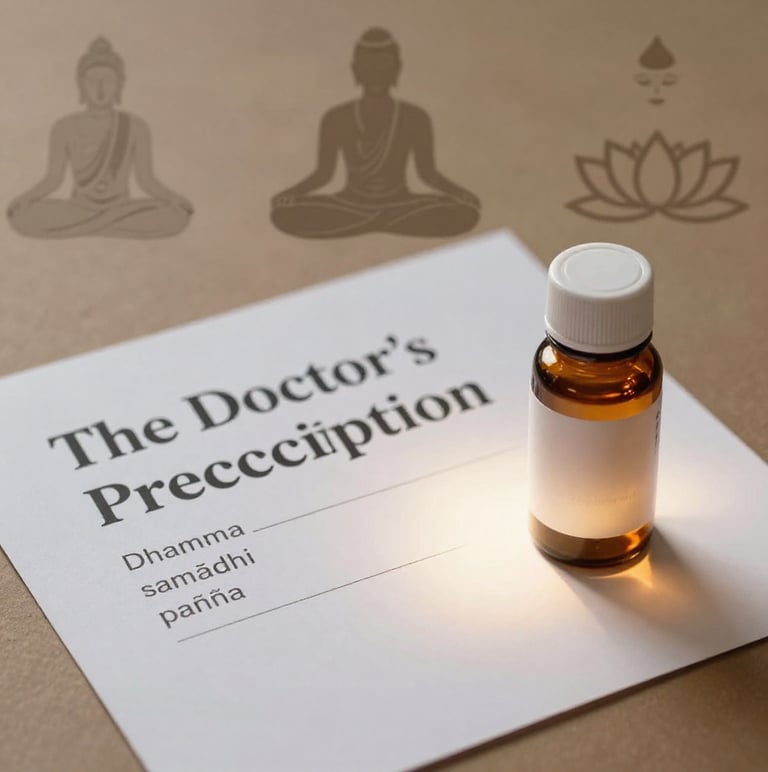

Blind devotion is like worshipping a doctor’s prescription without taking the medicine. Only the practice of Dhamma—sīla, samādhi, and paññā—through direct experience removes suffering.
A sick man visits a doctor. After examination, the doctor writes a prescription. The patient is pleased. Faith in the doctor is good. But when faith becomes blind, wisdom is lost.
At home, the man places the doctor’s photo on his altar. He offers flowers and incense, circles it ritualistically, bows down, and endlessly recites the prescription:
“One pill in the morning, one in the afternoon, one in the evening.”
He never takes the medicine.
This is not faith.
This is madness.
Another man asks the doctor, “What is my disease? How will this medicine help?” The doctor explains clearly. The man understands—then goes home and argues with his neighbours, declaring his doctor superior and all other medicines useless.
Yet he still does not take the medicine.
So too with Dhamma.
Seeing human suffering, an Enlightened One prescribes:
Practise sīla (moral conduct),
samādhi (concentration),
and paññā (wisdom).
Misery ends when its cause is removed.
But instead of practising, people worship the prescription, argue over beliefs, form sects, perform rites and rituals—and remain sick.
True wisdom is bhāvanā-mayā paññā:
not believing,
not arguing,
but applying Dhamma through direct experience.
Only the medicine taken heals.